Sunlight, wired to code
Four product lines — rooftop plants, pump sets, street lights and water heaters — installed by a licensed electrical contractor rather than a reseller. The approvals come with the job.
PM Surya Ghar: Muft Bijli Yojana
The scheme pays a subsidy straight into the consumer's bank account after commissioning — up to ₹78,000 for a residential rooftop system. It is not a discount off our quotation; it is a transfer you receive, and it only arrives if the file is correct.
₹78,000
Maximum central subsidy on a residential rooftop system under the scheme.
Ours
Portal registration, DCR-compliant modules, inspection and net-metering — filed and chased by us.
Rooftop solar for homes, societies & industry
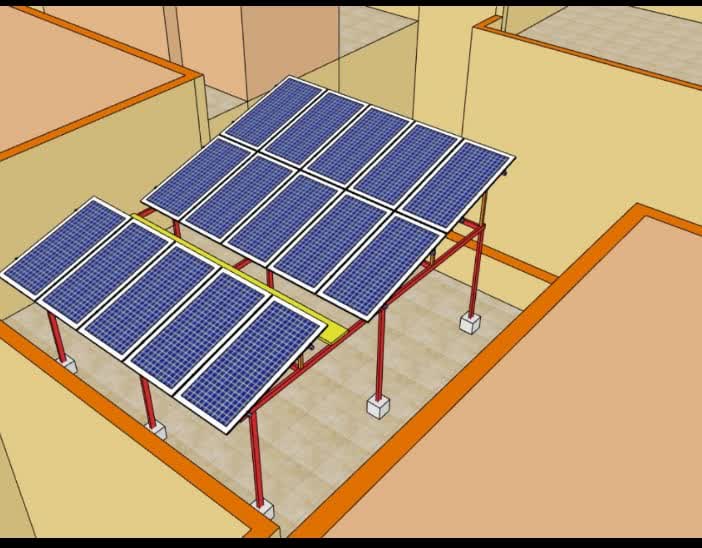
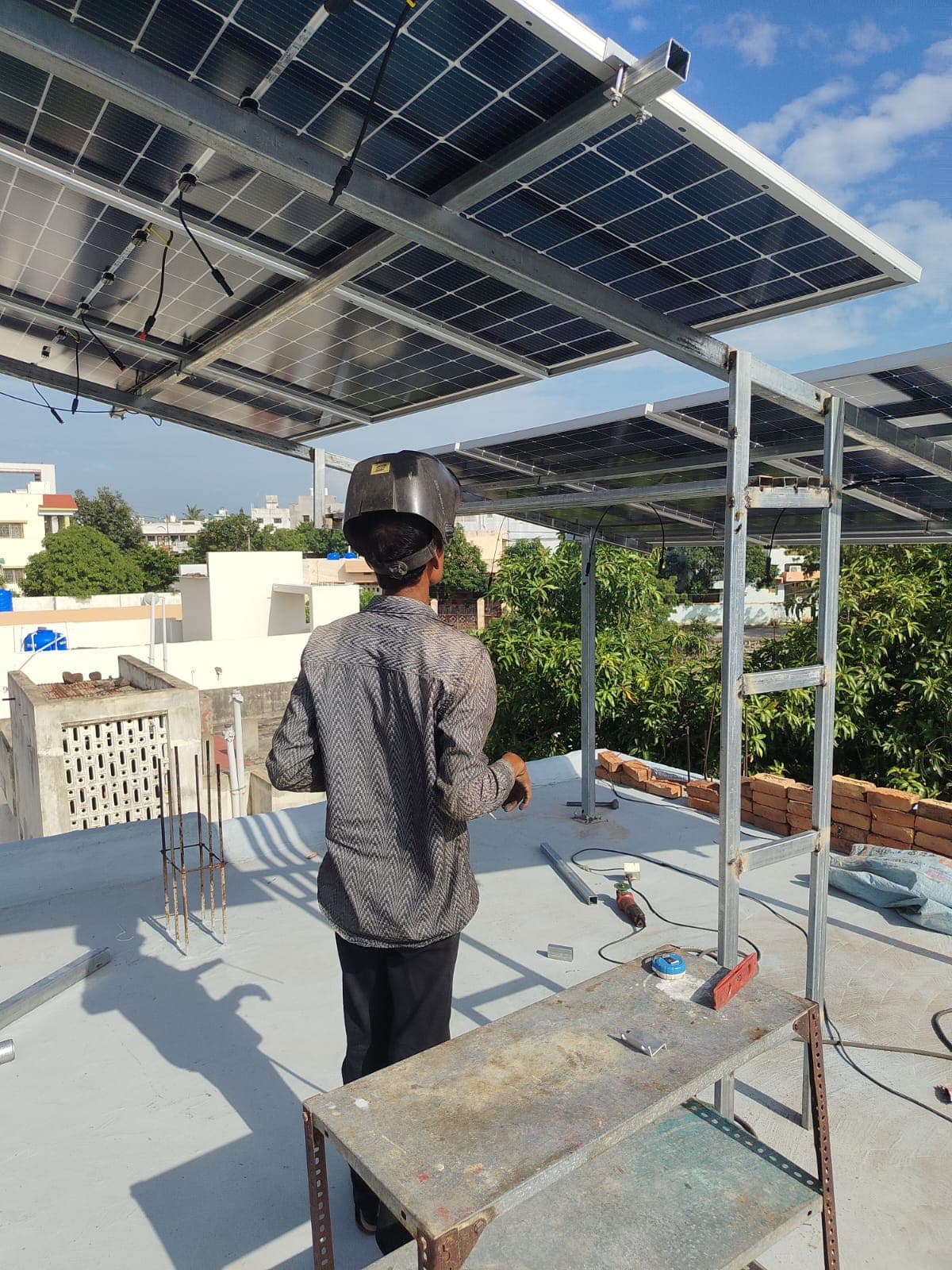
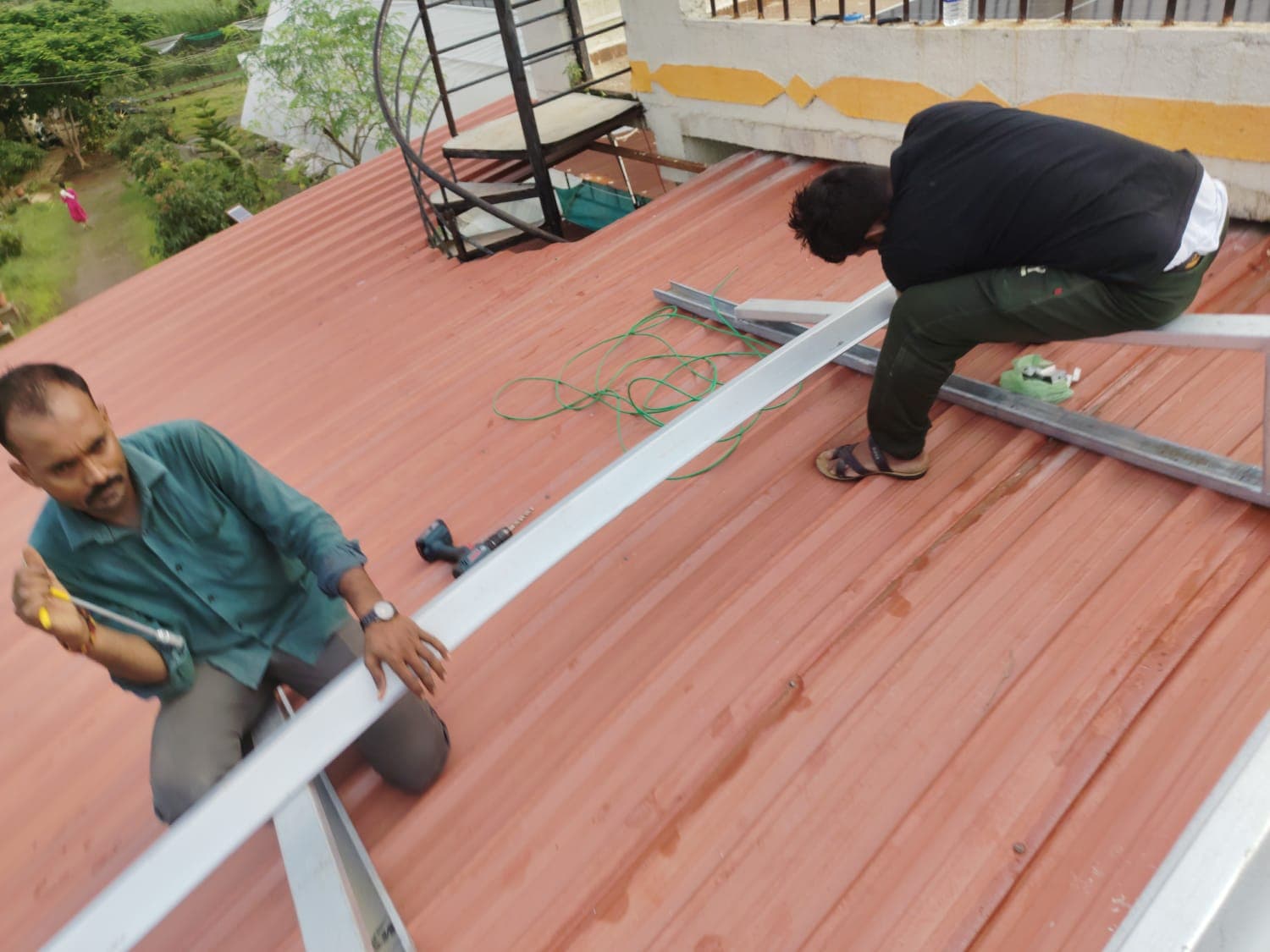
We start with a shadow survey and your last twelve bills, not with a kW number. The structure is fabricated to suit the roof — RCC slab, sheet roof, or elevated over a terrace — and hot-dip galvanised so it outlasts the modules.
- On-grid, off-grid and hybrid configurations
- Elevated structures that keep the terrace usable underneath
- String inverters with labelled AC and DC distribution boxes
- Array earthing and lightning arrestors inside the scope
- HT and LT commercial consumers alongside residential
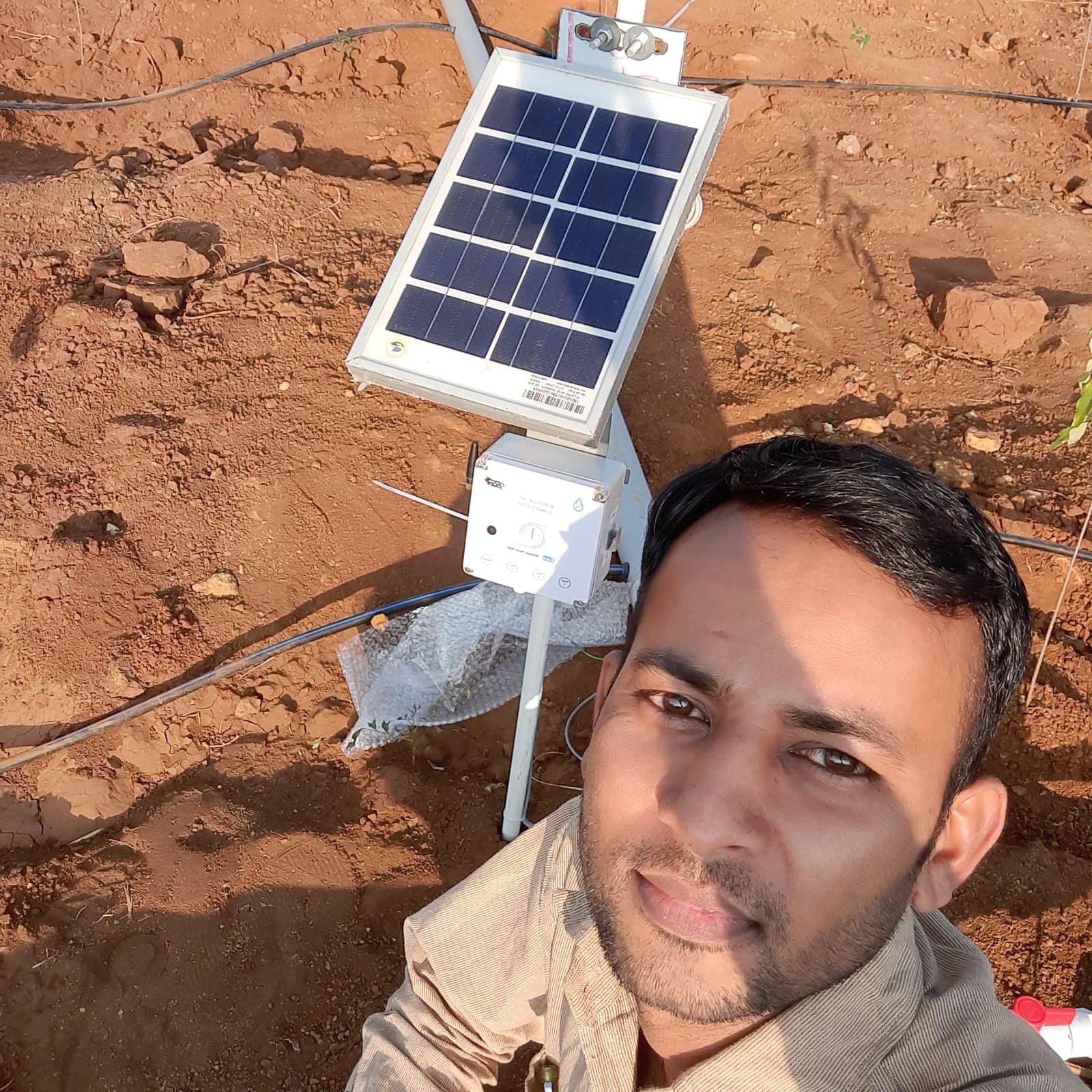
Pump sets sized against the borewell
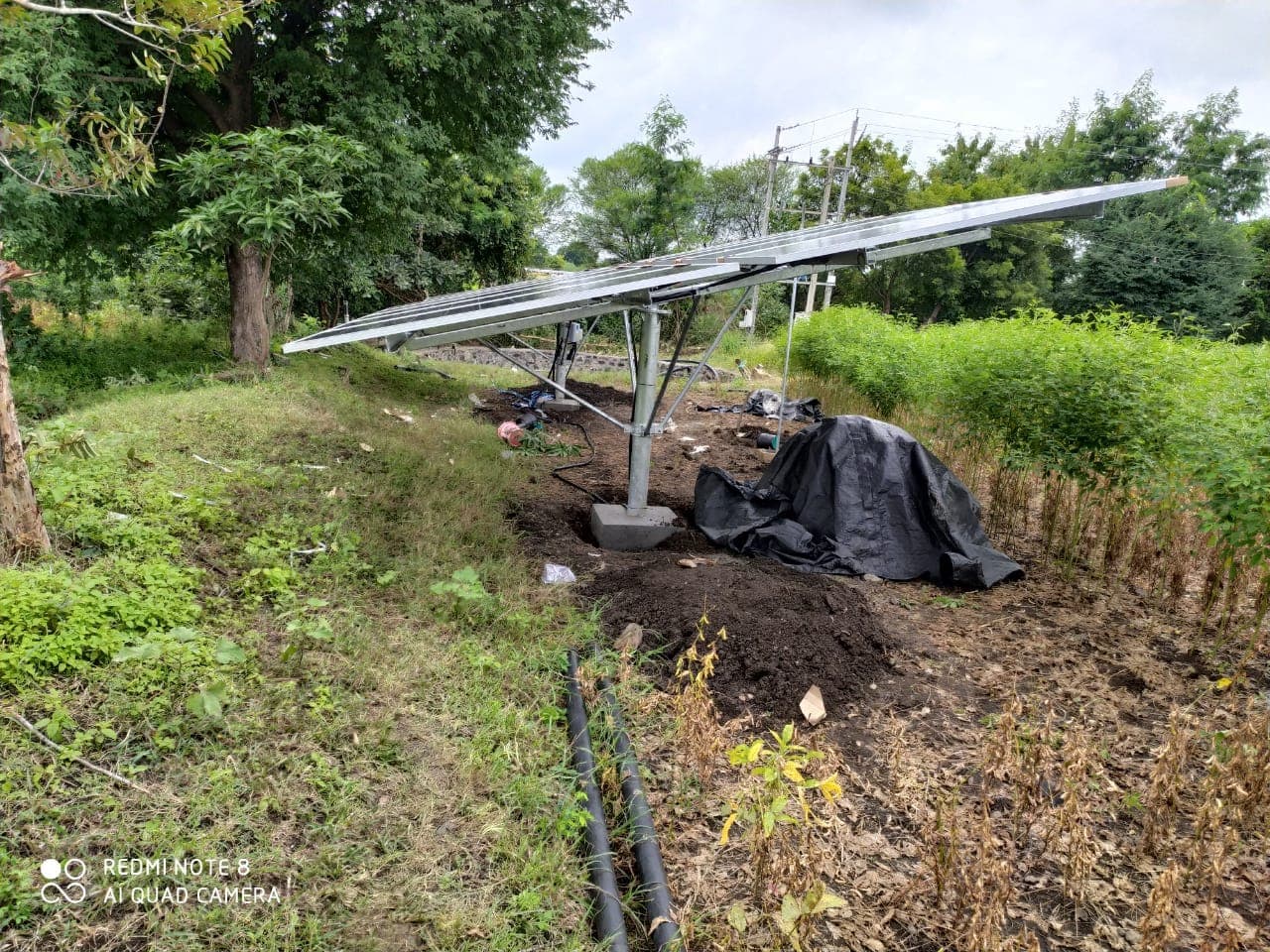
MNRE-standard agricultural sets on fabricated ground-mounted pedestals. The drive controller does the real work — tracking the array's maximum power point through the day so the pump keeps lifting as the light moves.
Typical pump-set specification
- Motor
- High-efficiency BLDC
- Wet end
- 304-grade stainless steel
- Controller
- Integrated MPPT tracking, IP65
- Conformance
- NEMA and IS 9283
- Control
- On/off by SMS, cloud monitoring
- Diagnostics
- Fault codes with status LEDs
- Submersible and surface sets for agriculture and estates
- Remote controllers running off their own small panel
- VFD panels on larger schemes so motors ramp instead of slamming
Poles that need no cable trench
Panel, battery, controller, luminaire and pole supplied and erected as one item — for society roads, farm approaches, industrial premises and panchayat lanes where running a supply cable is the expensive part.
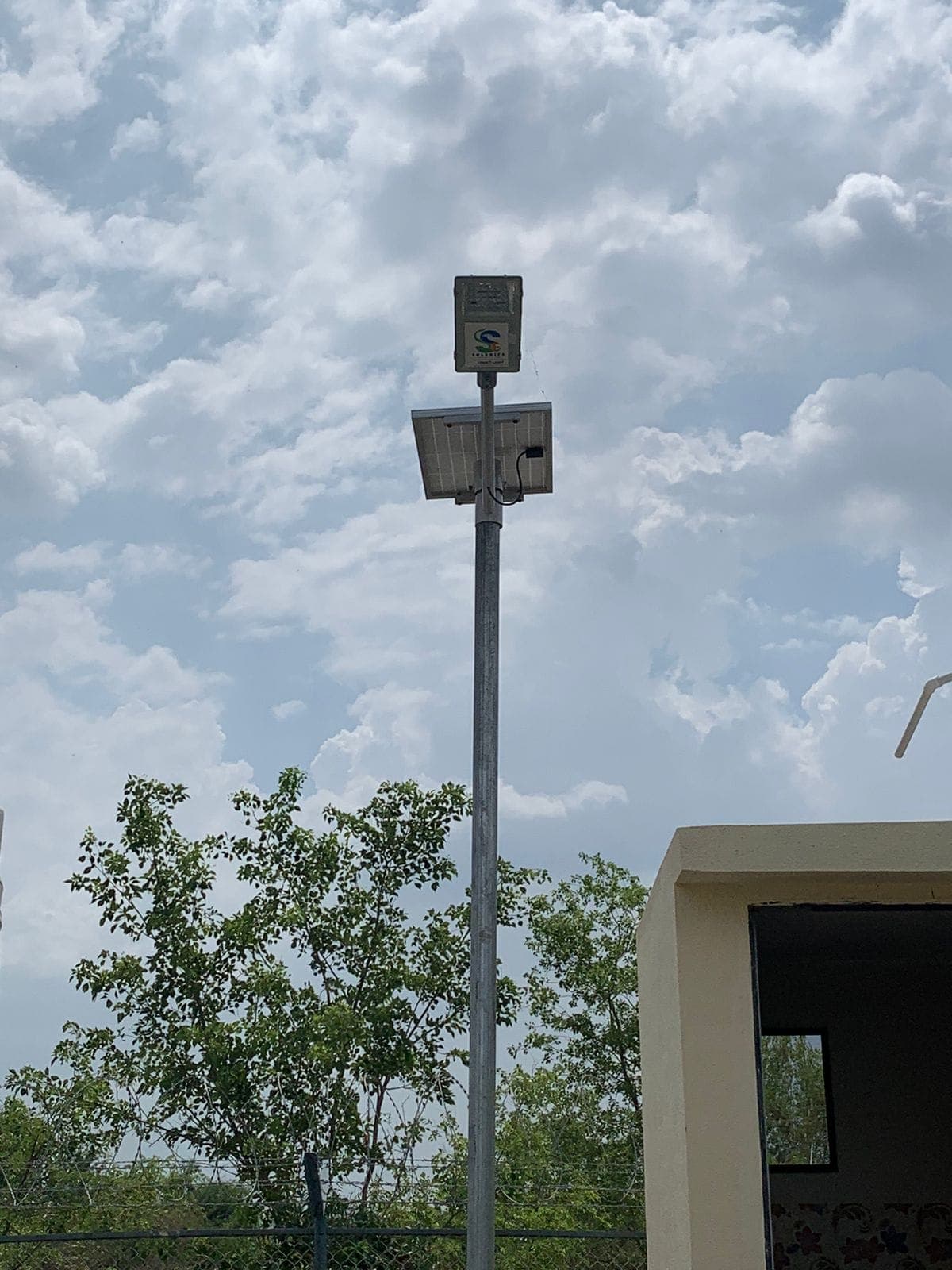
All-in-one and split-type fittings, sized on the hours of light you actually need rather than the largest battery we can sell.
Hot water without the geyser bill
Evacuated-tube and flat-plate systems sized on your daily hot-water demand in litres, mounted on the roof and plumbed into the existing line. The cheapest solar you can buy, measured against what it displaces.
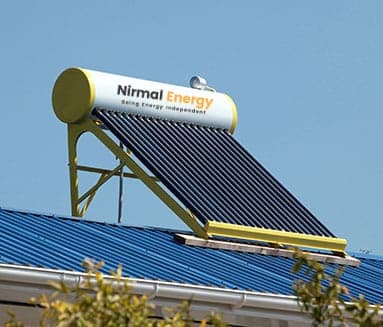
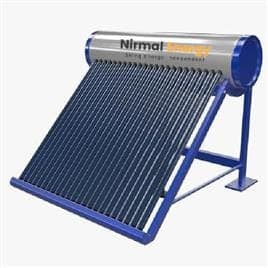
For households and commercial hot-water loads — hostels, kitchens, guest houses — where a geyser bank runs every morning.
What a solar job actually involves
Six stages. Four of them are ours to chase, not yours.
Site survey
We measure the roof or the plot, check shadow-free area, read your last bill, and confirm the sanctioned load. You get a straight answer on what will fit and what it will produce.
Design and proposal
Array layout, structure design, inverter and module selection, single-line diagram, and a written quotation. DCR-compliant modules where the subsidy requires them.
Portal registration
For homes, we register the consumer on the PM Surya Ghar portal, submit the application against your consumer number, and track it to sanction.
Technical feasibility
MSEDCL feasibility approval, load extension where the connection needs it, and the net-metering agreement. This is the step that stalls most rooftop projects.
Installation
Structure fabrication and erection, module mounting, DC and AC cabling, distribution boxes, earthing, and lightning protection — wired to code and labelled.
Testing and commissioning
Inspection, testing report, meter change, net-meter synchronisation, and the commissioning certificate. Subsidy is released to your account after this stage.
Find out what your roof
will carry.
A survey settles the shading, the structure and the sanctioned load in one visit — and tells you whether the subsidy applies before you commit to anything.